When Replace Your Roof in New England, Booking a roof replacement in the middle of a July heatwave feels logical. It’s dry, it’s sunny, and the crew isn’t fighting snow. It’s also one of the more common timing mistakes New England homeowners make, because asphalt shingles have a temperature range they need to install correctly, and a scorching summer roof surface can exceed the top of that range just as easily as a January morning falls below the bottom of it.
Timing a roof replacement in New England isn’t just about picking a season that sounds pleasant. It’s about matching the work to a fairly narrow temperature window, working around contractor demand cycles, and getting the project done before winter turns any existing roof weakness into an active leak. Here’s how the calendar actually breaks down.

Why Roof Replacement Timing Matters More Here Than in Other Regions
Asphalt shingles, still the material on the large majority of New England homes, rely on a self-sealing adhesive strip that bonds each shingle to the one below it. That strip needs heat to activate generally somewhere in the 40 to 85 degree Fahrenheit range, with the sealing process working best as surface temperatures approach 70 degrees. Below that range, the adhesive won’t properly bond. Above it, particularly during a summer heat spike, shingles can become soft enough to tear or scuff during handling.
New England’s climate compresses the ideal window on both ends. Winters regularly push installation temperatures well below the workable range for weeks at a time, and summer heat waves can push the roof surface temperature past the point where shingles handle cleanly. That leaves spring and fall carrying most of the weight for ideal Roof Installation conditions, which is exactly why those two seasons tend to book up fastest with contractors across Massachusetts.
Fall: The Season Most Roofers Recommend
Fall consistently comes up as the preferred season among roofing professionals, and the reasoning holds up. Temperatures through September and October in Massachusetts tend to sit in that ideal 45 to 70 degree range for extended stretches, humidity drops from summer highs, and rainfall is typically more predictable than in spring. That combination lets shingle adhesive activate properly and gives crews consistent, dry working conditions without the scheduling disruptions that come with sudden storms.
There’s also a practical, sequencing reason fall works well here specifically: it’s the last real opportunity to get a new roof on before winter arrives. If you already know your roof won’t survive another New England winter unrepaired, scheduling in fall means the ice barrier, flashing, and shingles are freshly installed before the freeze-thaw cycles and ice dam risk really start.
The trade-off is demand. Because so many homeowners have figured this out, fall booking calendars fill up quickly, and contractors are often working at capacity from September through November. If you want a fall slot, calling well before Labor Day gives you meaningfully better odds than calling in October.
Spring: A Close Second, With a Different Set of Trade-offs
Spring offers a similar temperature window to fall that same 45 to 70 degree stretch shows up on the way up out of winter, not just on the way down into it. The difference is predictability. New England spring weather swings more than fall does, with cold snaps, late-season nor’easters, and stretches of heavy rain that can delay a project mid-installation in ways fall rarely does.
Spring carries one real advantage over fall: if your roof made it through winter with new or worsened damage a section that lost shingles in a windstorm, an ice dam that caused a leak spring is when that damage becomes obvious, and getting it addressed before summer heat and next winter’s freeze-thaw cycles compound the problem is a reasonable priority. Homeowners who wait until fall to deal with damage discovered in March are giving a compromised roof an entire additional season of exposure.
Why Summer Isn’t the Roofing Off-Season You Might Assume
Summer is when a lot of homeowners default to scheduling roof work, mostly because it’s when people think about home projects generally. It’s workable, but it comes with real caveats specific to shingle installation.
On hot, sunny days, the roof surface itself can run significantly hotter than the ambient air temperature, sometimes pushing well past the upper end of the ideal installation range. This doesn’t stop projects from happening in summer, but experienced crews adjust their schedule around it, often starting early in the morning and pausing during peak afternoon heat to avoid handling shingles at their softest and most vulnerable to scuffing or granule damage.
Summer also tends to bring more contractor availability than fall, simply because fewer homeowners are actively thinking about their roof compared to right before winter. If your schedule is flexible and you’re not dealing with active damage, a summer project booked with a contractor who properly manages the midday heat is a perfectly reasonable option — just not automatically the best one.
Winter Roofing in New England: Possible, But Not Ideal
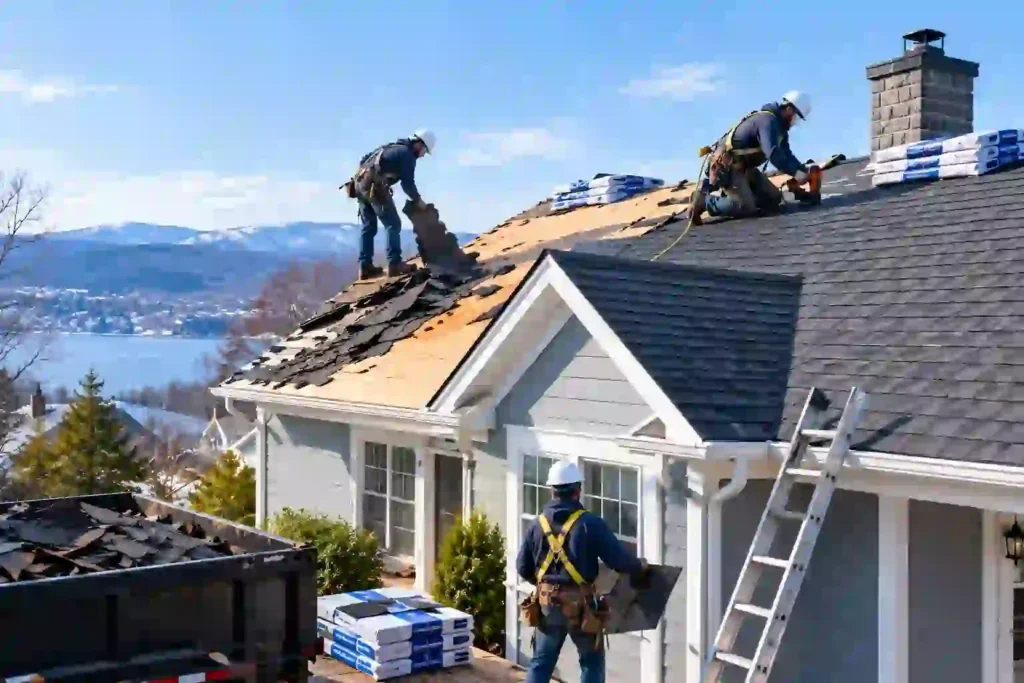
Winter roof replacement in Massachusetts happens, usually because of an emergency — active storm damage, a failed roof that can’t wait for spring — rather than by homeowner preference. It’s technically possible; reputable contractors know how to hand-seal shingles with roofing cement when temperatures are too low for the adhesive strip to activate on its own, and materials can be kept warm before installation to reduce brittleness.
But winter installation comes with real limitations. Cold shingles crack more easily during handling, snow and ice create genuine safety hazards for crews working at height, and daylight hours are shorter, which slows overall project pace. If a winter replacement is unavoidable due to storm damage or an active leak, it’s worth confirming directly that your contractor has experience with cold-weather hand-sealing procedures, since a rushed winter job without proper technique is more likely to develop problems by spring.
How Roof Age Should Factor Into Your Timing Decision
Season isn’t the only variable. If your roof is already past 18 to 20 years old, particularly after a hard New England winter, the calculation shifts from “what’s the ideal season” to “how much longer can this roof realistically wait.” A roof already showing curling shingles or granule loss going into another winter risks a leak mid-season, when temperatures make emergency repair work harder and less effective. In that situation, booking the earliest available fall or spring slot, even if it means paying slightly more for expedited scheduling, is often the more cost-effective choice than waiting for a “perfect” opening months away.
Planning Around Contractor Demand, Not Just Weather
Weather sets the outer boundaries of when installation can happen well. Contractor availability determines when you can actually get it scheduled within those boundaries. Since fall demand consistently outpaces spring and summer across Massachusetts, booking your inspection and estimate several weeks to a couple of months before your target installation window gives you meaningfully more flexibility on the actual date, and more room to address any decking issues discovered once the old roof comes off, rather than compressing everything into a rushed pre-winter timeline.
Frequently Asked Questions
What is the best month to replace a roof in Massachusetts? September and October typically offer the most consistent temperature range for proper shingle sealing, combined with more predictable weather than spring, which is why fall books up fastest with contractors.
Can you replace a roof in the winter in New England? Yes, though it requires hand-sealing techniques and careful material handling since cold temperatures prevent the shingle adhesive strip from activating on its own. It’s typically reserved for emergency situations rather than planned projects.
Is it bad to replace a roof in the summer heat? Not necessarily, but hot roof surface temperatures can soften shingles and make them more prone to scuffing or tearing during installation. Experienced crews adjust their schedule to work around peak afternoon heat.
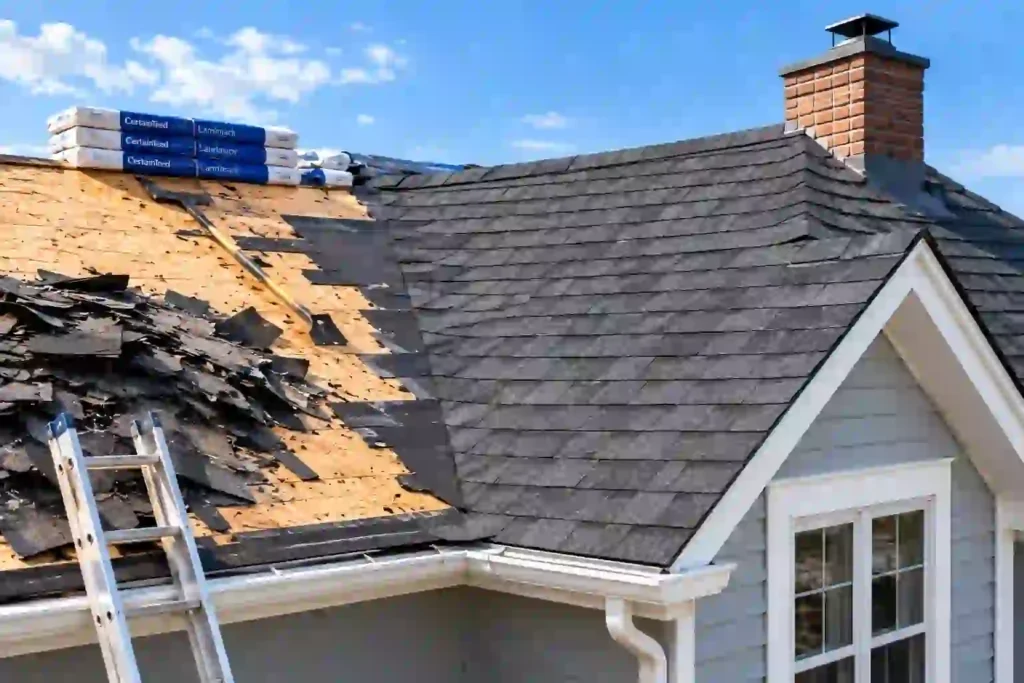
What temperature is too cold to install asphalt shingles? Most manufacturers recommend installation above roughly 40 degrees Fahrenheit. Below that, the self-sealing adhesive strip may not bond properly without manual hand-sealing.
Should I wait for fall if my roof is already leaking? No. Active leaks or significant damage should be addressed as soon as reasonably possible rather than waiting for an ideal season, since delaying risks further water intrusion and structural damage regardless of the calendar.
How far in advance should I book a fall roof replacement? Given how quickly fall calendars fill across Massachusetts, reaching out in late summer, ideally before Labor Day, gives you significantly better odds of securing your preferred timeframe.
Does roof replacement timing affect the warranty? Manufacturer warranties are generally tied to proper installation technique rather than the calendar date itself, but installations done outside the ideal temperature range without correct cold or hot weather procedures can risk improper sealing, which may affect long-term performance.
The right season for your roof replacement depends on your roof’s actual condition as much as the calendar. If you’re not sure whether your roof can wait for an ideal fall slot or needs attention now, an inspection gives you a straight answer either way. Call Newton Roofing Company at (857) 219-9090 or request a free estimate to find out where your roof actually stands.