Roof Repair vs. Roof Replacement, Not every homeowner gets that lucky with the first opinion they hear. The line between a repair and a full replacement isn’t always obvious from the ground, and the wrong call in either direction costs you — either you’re throwing money at a roof that’s already failing, or you’re replacing something that had years of life left in it. Here’s how to actually tell the difference.
Signs You Only Need a Repair
A roof rarely fails all at once. Most of the time, the damage is localized, and a targeted repair fixes the actual problem without disturbing the rest of the roof system.
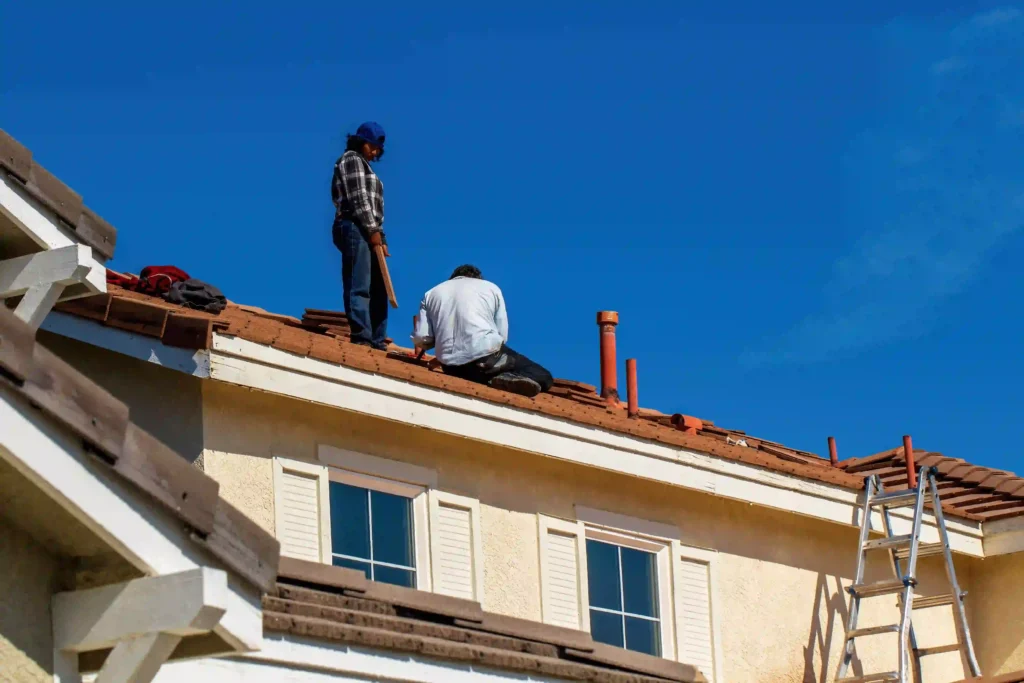
Isolated shingle damage. A few missing, cracked, or lifted shingles after a windstorm — especially if they’re confined to one section — is a repair, not a replacement. As long as the roof decking underneath is dry and intact, replacing the affected shingles solves it.
Flashing issues. Leaks around chimneys, skylights, and roof valleys are frequently a flashing problem, not a shingle problem. Flashing seals the transitions where two roof planes meet or where the roof meets a vertical surface, and it fails years before the surrounding shingles do. Re-sealing or replacing flashing is a same-day fix in most cases.
A single leak with no history. One water stain on the ceiling, appearing for the first time, usually points to one point of failure — a nail pop, a cracked pipe boot, a small gap in the underlayment. If your roof has no prior leak history and this is a first occurrence, it’s almost always repairable.
A roof under 15 years old. Asphalt shingle roofs are rated for 20 to 30 years depending on the manufacturer (GAF, Owens Corning, and CertainTeed all rate their architectural shingles in that range). If your roof is well within that window and the damage is limited, repair is the right call.
Signs You Need a Full Replacement
Some damage signals that the roof as a system — not just one component — has reached the end of its usable life.
Multiple leaks in different areas. One leak is a repair. Three or four leaks showing up in unrelated parts of the roof over a season or two means the underlayment and decking are failing broadly, not in one spot. Patching each leak individually becomes a losing game — you’re chasing symptoms instead of addressing the cause.
Curling or cupping shingles across the whole roof. This is age, not storm damage. When shingles curl at the edges or granules wash off in sheets (check your gutters — heavy granule loss there is a reliable tell), the asphalt has dried out and lost its ability to shed water. It’s happening everywhere, not just where a branch fell.
A sagging roofline. Any visible sag, dip, or wave in the roof deck is structural, not cosmetic. This usually means moisture has compromised the plywood sheathing underneath, and no amount of surface repair fixes rotted decking. This one warrants an inspection before it gets worse — sagging can progress to real structural damage.
Storm or hail damage across a large section. Significant wind damage or hail impact that affects more than roughly 25-30% of the roof surface is typically more cost-effective to replace than to repair piecemeal — and most homeowners insurance adjusters will reach the same conclusion when assessing a claim.
Visible mold, rot, or a persistent musty smell in the attic. By the time you can see or smell it, moisture has been getting into the roof assembly for a while. This is a full-system problem, not a shingle problem.
How Roof Age Factors In (New England Lifespan Angle)
Age matters more in Massachusetts than it does in milder climates. New England’s freeze-thaw cycle — where meltwater refreezes overnight, expands, and works its way into every crack and seam — shortens the practical lifespan of a roof compared to the manufacturer’s rated years. A shingle roof rated for 25 years under ideal conditions often shows real wear by year 18-20 here, especially on roofs without adequate attic ventilation, where heat buildup accelerates shingle aging from underneath.
Ice dams compound this. A single bad ice dam season can do more damage to an aging roof than five mild winters combined, because trapped meltwater finds every weak point — old flashing, worn ice and water shield, thinning shingles — and pushes water directly under the roofing material.
The practical rule: if your roof is under 12-15 years old, lean toward Roof Repair unless the damage is severe or structural. If it’s past 18-20 years and freeze-thaw cycles have been hard on it, a repair might buy you a season, but a full inspection to check the decking and overall condition is worth doing before you spend money either way.
Cost Comparison — Repair vs. Replacement
Repairs typically run from a few hundred dollars for flashing or a handful of shingles up to $1,500-$2,000 for more involved sectional work. A full roof replacement in the Newton area runs considerably higher, scaling with square footage, material choice, and the number of layers being torn off.
The math that matters isn’t just the sticker price — it’s cost per year of remaining life. A $1,200 repair on a 10-year-old roof that then lasts another 10-15 years is a clear win. A $1,200 repair on a 22-year-old roof that buys you one more winter before three more leaks show up is money that would have been better put toward the deposit on a new roof. This is exactly the kind of judgment call that benefits from an in-person inspection rather than a guess based on age alone.
Insurance coverage also shifts the calculation. If storm or wind damage caused the problem, your homeowners insurance may cover repair or replacement after your deductible, which changes what “cheaper” actually means for your out-of-pocket cost. Document the damage with photos before any repair work begins if you plan to file a claim.
When to Call a Newton Roofer for a Second Opinion
If a contractor tells you that you need a full replacement, and you haven’t had anyone physically inspect the attic and roof deck — not just glance at the shingles from a ladder — get a second opinion before you sign anything. A proper roof inspection checks the decking for soft spots, evaluates flashing at every penetration, and looks at the attic from the inside for ventilation issues, moisture, and daylight coming through anywhere it shouldn’t.
That’s the difference between an estimate and a diagnosis. Newton Roofing Company provides a written inspection report with photos, so you know exactly what you’re paying for — a repair, or a replacement — before any work starts.
Frequently Asked Questions
How much does roof repair cost in Newton, MA? Most repairs — a section of flashing, a handful of shingles, a single leak — run between $250 and $1,500. More involved sectional repairs, like decking damage around a chimney or valley, can run $1,500 to $3,000. We give you an exact number after inspecting the roof, not a phone estimate.
How much does a full roof replacement cost in Newton, MA? A typical single-family roof replacement in Newton runs between $9,000 and $18,000, depending on square footage, material (asphalt vs. slate vs. metal), and how many layers need to be torn off. Larger homes, steep pitches, or complex rooflines with multiple valleys push toward the higher end.
Is it cheaper to repair or replace a roof? In the short term, repair is almost always cheaper — often a few hundred dollars versus several thousand. But if your roof already has multiple leaks or is past 18-20 years old, repeated repairs can add up to $2,000-$4,000 over a couple of years while the underlying problem keeps spreading. At that point, replacement is the better financial decision, not just the safer one.
Will homeowners insurance cover the cost either way? If the damage came from a storm, wind, or hail event, your policy typically covers repair or replacement costs above your deductible. Normal wear from age is not covered. We help document the damage with photos so your claim reflects what actually happened to the roof.
How long does a roof repair take vs. a full replacement? Most repairs are completed same-day or within a few hours. A full roof replacement on a single-family home in Newton typically takes one to three days, depending on the complexity of the roofline and weather.
Can a 20-year-old roof still be repaired instead of replaced? Sometimes, if the damage is limited to one section and the decking underneath is still sound. But at that age, one repair often reveals a second problem nearby. We’ll tell you honestly if a repair is a real fix or just a delay before replacement.
Do you charge for the inspection that determines repair vs. replacement? No. Newton Roofing Company provides free estimates and a written inspection report with photos, so you know exactly what you’re paying for before any work begins.
Not sure which one your roof needs? Call (857) 219-9090 or request a free estimate, and we’ll give you a straight answer, not just a bigger number.